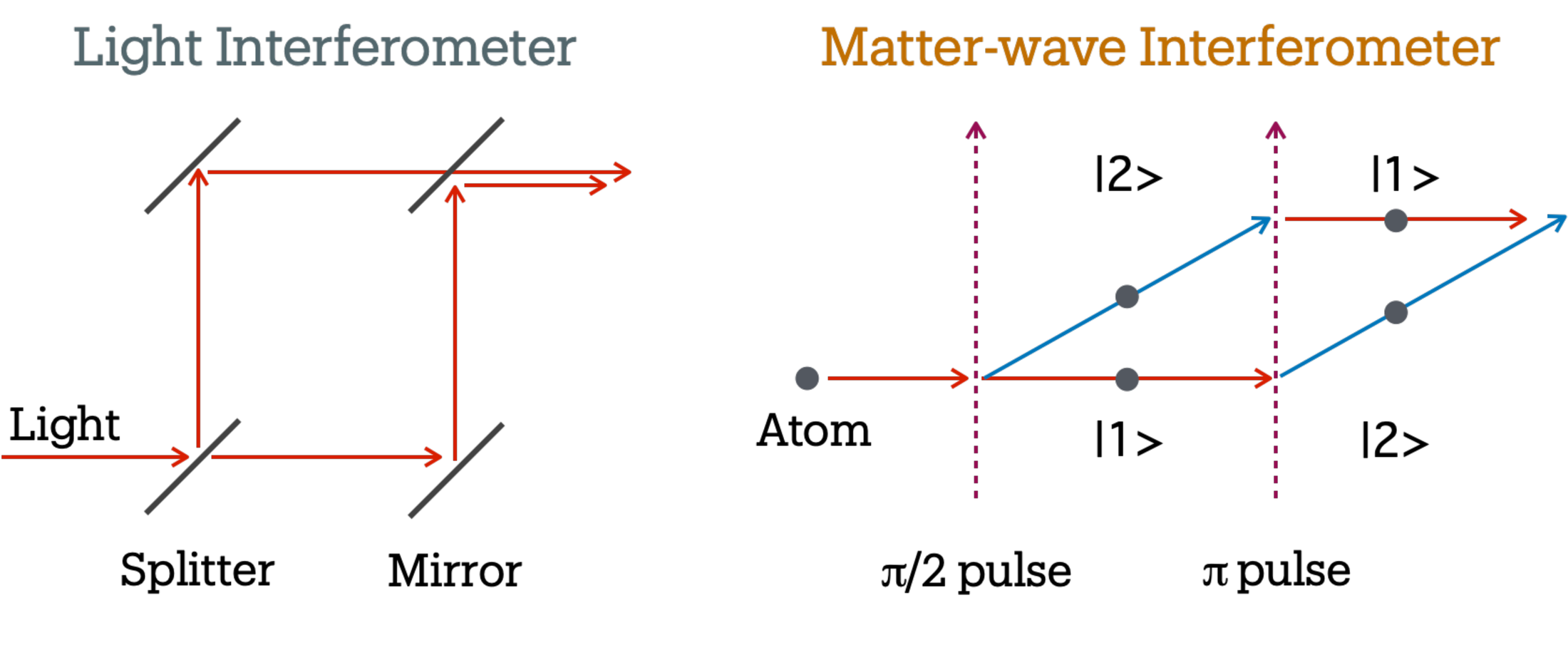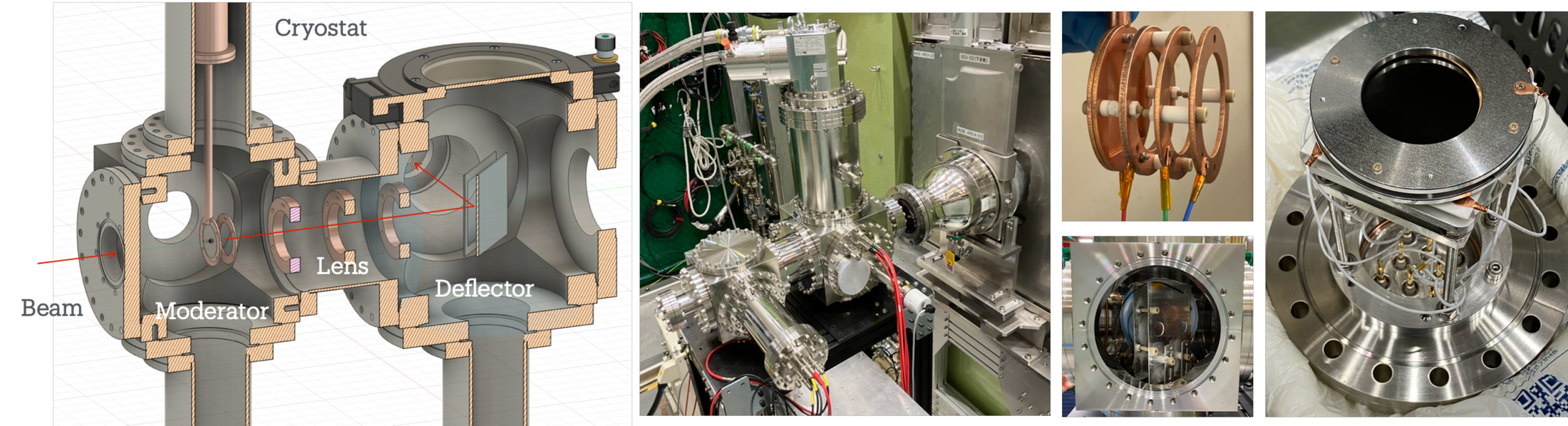
From spectroscopy to interferometry
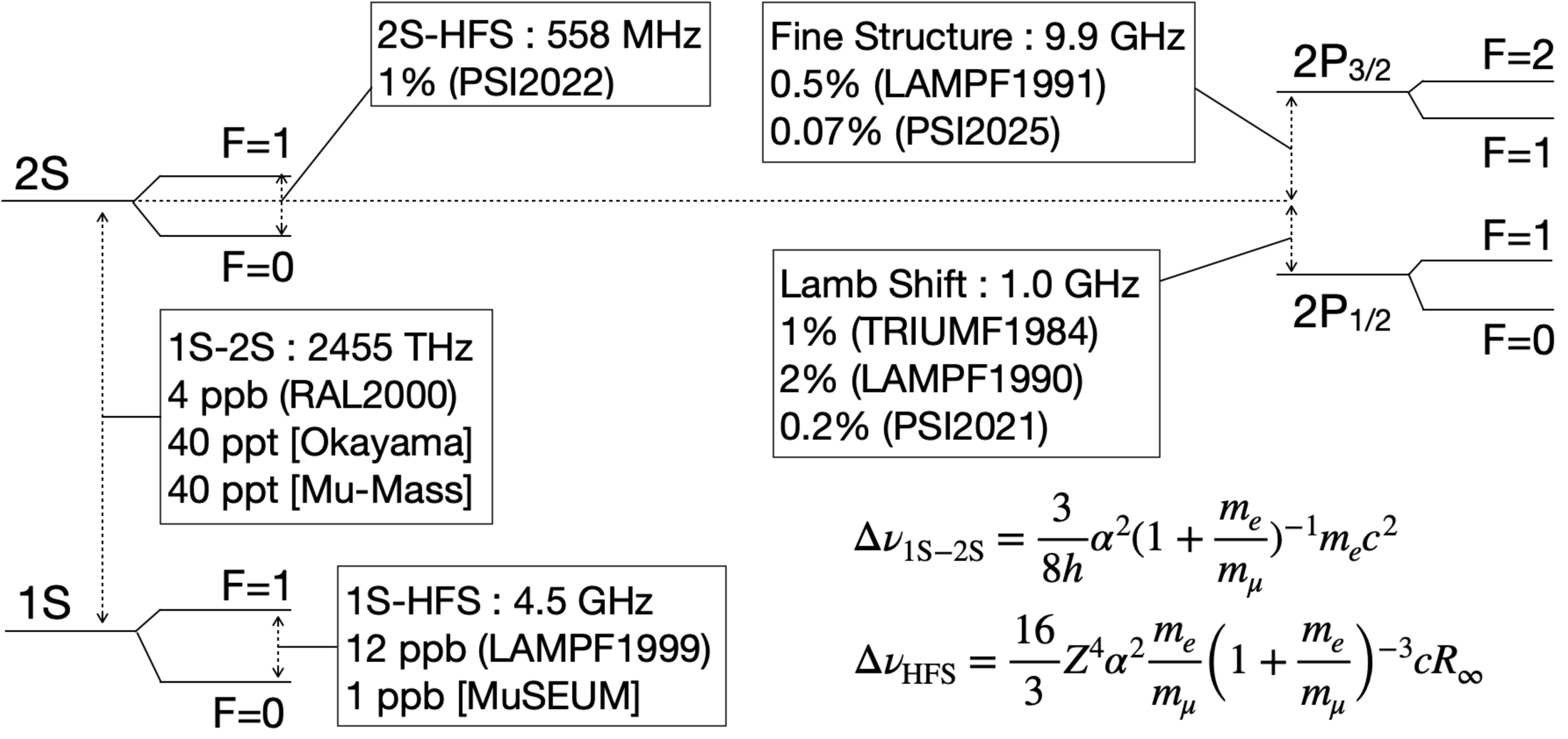
Muonium (Mu) is a hydrogen-like atom consisting of a positive muon and an electron. Because it contains only leptons and no composite nucleus, its energy levels can be calculated with very high precision in bound-state quantum electrodynamics. Precision spectroscopy of muonium therefore provides stringent tests of the Standard Model and precise values of fundamental constants.
The muon mass is one of the important constants extracted from muonium spectroscopy. At the same time, the uncertainty of the muon mass limits how far several spectroscopic tests can be pushed. This motivates an independent determination of the mass using a method that does not rely on the same spectroscopic theory used to interpret the transition frequencies. [1], [2]