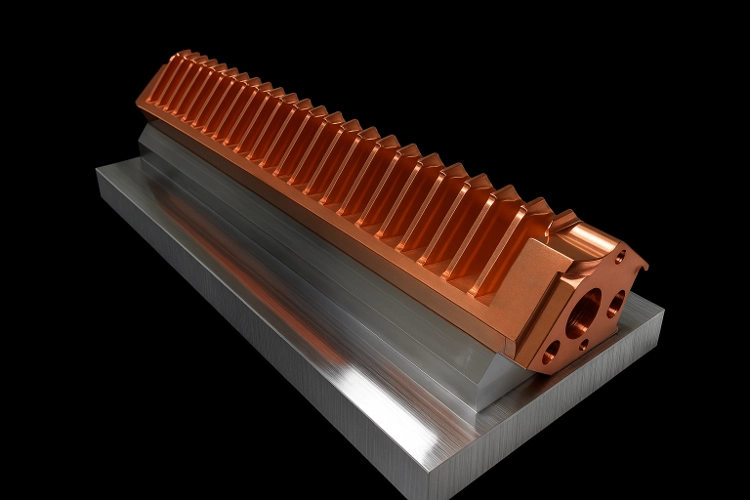
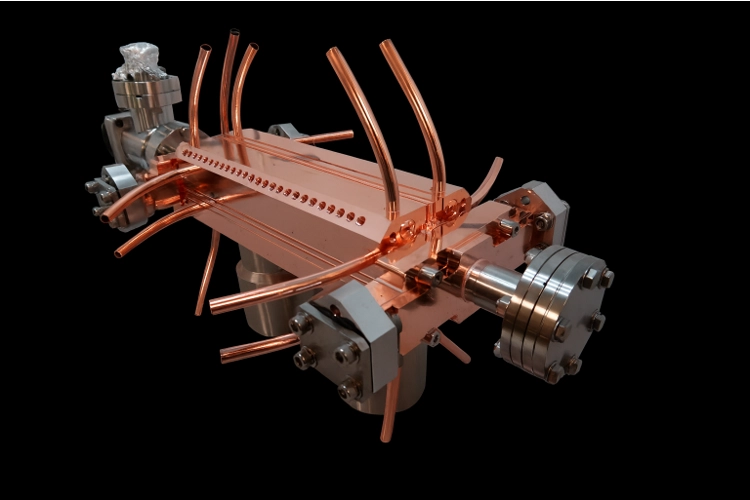
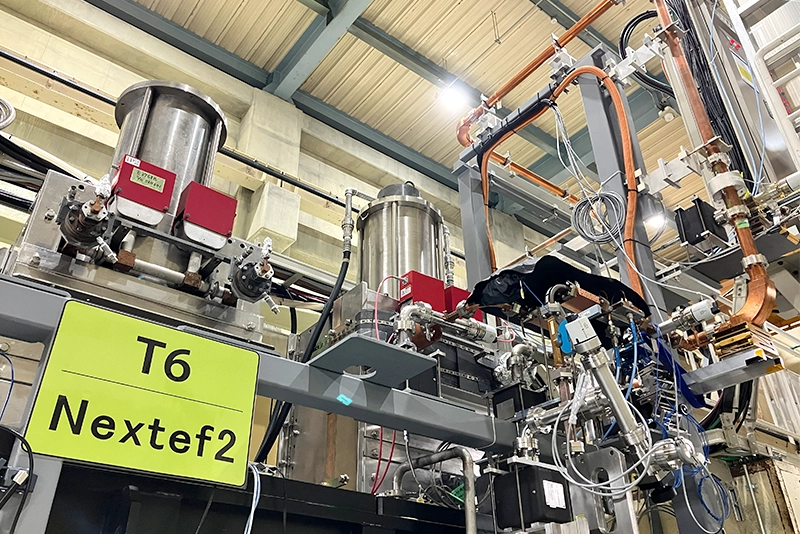
We conduct advanced research on normal-conducting accelerating structures—the very heart of particle accelerators—including X-band to millimeter-wave acceleration, vertically split structures, and dielectric acceleration. We also pursue studies aimed at elucidating the mechanisms of vacuum insulation breakdown (breakdown) inside accelerating cavities, which can limit the performance of these systems.
Large accelerators are powerful experimental tools but require high power, large installation space, and significant cost, which hinder long-term operation and new project development. While superconducting accelerators offer high energy efficiency, they demand expensive niobium structures and bulky cryostats.
Our research explores advanced technologies—such as ultra-high-frequency and dielectric acceleration—to enable normal-conducting accelerators (typically made of low-cost copper) to achieve superior energy efficiency and the inherent compactness that superconducting systems cannot provide.