
 "Trans-Planckian Physics and Inflation: An Introduction of Renormalizable and Background-Free Quantum Gravity"
By Ken-ji Hamada (Fundamental Theories of Physics 223, Springer Nature, 2025)
For details, see Springer Nature Link: Trans-Planckian Physics and Inflation, or Books
"Trans-Planckian Physics and Inflation: An Introduction of Renormalizable and Background-Free Quantum Gravity"
By Ken-ji Hamada (Fundamental Theories of Physics 223, Springer Nature, 2025)
For details, see Springer Nature Link: Trans-Planckian Physics and Inflation, or Books
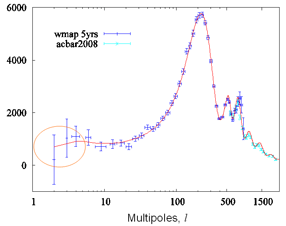
The discovery of the cosmic microwave background radiation (CMB) by Penzias and Wilson has proven that the universe was once a melting pot of high energy reactions at its early stage, and since then it has been cooling as it expands. Valuable information on physical processes taking place in the expanding universe has been recorded in the CMB as tiny anisotropies. Angular power spectra of the anisotropies, recently observed by the Cosmic Background Explorer (COBE) and the Wilkinson Microwave Anisotropy Probe (WMAP), are, roughly speaking, projection of the history for the period between its birth to the present. It gives us a amazing hope that if we believe the idea of inflationary universe describing a extremely rapid expansion without global thermalization, the long-distance correlation in observed anisotropies can provide the information about dynamics of the period before the universe grew to the Planck scale. We are now on the stage of revealing and verifying the quantum aspect of universe.
After passing many theoretical as well as experimental tests, the general theory of relativity has been established as the fundamental theory of gravity capable of describing the evolution of universe. Many questions in the mysteries of universe have arose expecting that the theory can give answers, such as, how the universe is created, why it is expanding, how it will evolve in the future, and so on. In order to answer these questions, we need to know the initial condition of the universe that would be set at the Planck time. However, it is the period when quantum mechanics rules the law of universe, and it is beyond the power of the classical general relativity. If we wish to apply the Einstein theory for the Planck scale phenomena, it has fatal difficulties, such as the black hole singularity and divergences in the canonical quantization procedure. Existence of these problems makes us wonder whether the Planck scale is the upper limit of the energy beyond which nature cannot be described in terms of physical laws. It is our ultimate task to construct the quantum theory which breaks the wall of Planck scale and creates a new frontier.
Renormalizable quantum theory of gravity developed on the basis of the conformal gravity in four dimensions provides an evolutional scenario of the universe which starts from quantum states with conformal invariance, passing through the inflationary era, and then makes transition to the conventional Einstein spacetime without adding any artificial field by hands. In this theory, the gravitational (metric tensor) field is written as a product of the conformal factor and the traceless tensor, and the conformal factor that primarily governs distance is treated strictly while the traceless tensor field is handled in perturbation. The renormalized coupling of the traceless tensor mode indicates the asymptotic freedom. It implies that at very high energies beyond the Planck mass scale, quantum fluctuations of the conformal factor are large and dominant; consequently the background freedom, or background independence in quantum spacetime, is realized and spacetime is nonsingular. This nature is called "asymptotic background freedom'' to distinguish from the normal asymptotic freedom. The power-law spectrum obtained from the two point correlation function of scalar curvature shows a significant character of the conformally invariant field theory which is expected to be observed cosmologically.
The asymptotic background freedom also implies that there exists a dynamical scale where the effective coupling of traceless tensor mode diverges, and the conformal symmetry loses its validity. About this point the universe is expected to make a transition from the quantum spacetime to the classical Einstein spacetime, and fluctuations of the conformal mode would be frozen to the classical background. Such a dynamical scale is given by the order of 10^17GeV below the Planck scale. The sharp fall off of the angular power spectra at low multipole components of anisotropies in the CMB is expected to be an appearance of dynamical scale. [Research papers on quantum gravity cosmology]
The inverse of the dynamical energy scale mentioned above gives the correlation length of quantum gravity. If shorter than this length, we cannot measure the distance, which is due to the background-metric independence where the concept of time and space is lost. Thus, it represents the minimal length of space-time we can measure physically. In this sense, space-time is practically quantized by this length unit without descretizing it. The energy of excitations in quantum gravity would be then given by the dynamical scale. If there is a stable excitation, it becomes a candidate for dark matter.
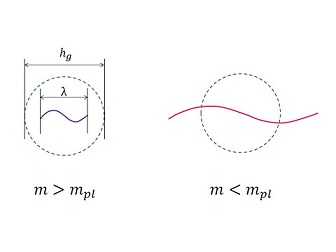
Before describing the details of the theory, let us briefly explain the limitations of Einstein's theory of gravity and why the concept of a spacetime phase transition is necessary to overcome them. While the existence of singularities and non-renormalizability are well-known issues, we can express the problem in a slightly different way. Suppose there is an elementary particle of mass m. Its Compton wavelength, which represents its quantum size, is given by 1/m. On the other hand, the Schwarzschild radius of this particle is given by m/m_p^2, where m_p is the Planck mass scale. This implies that if m > m_p, the particle becomes hidden inside its horizon, causing the information of that particle to be lost. This is a unitarity problem that arises in strong gravitational fields. It suggests that in a high-energy world beyond the Planck scale, particles become black holes, and conventional descriptions no longer hold. Therefore, when considering quantum field theory, a ultraviolet (UV) cutoff must typically be introduced at the Planck scale. Generally, theories that depend on a background spacetime require the UV cutoff, which is also the root cause of the cosmological constant problem.
The classic theorem by Ostrogradsky in 1850 underpins the fact that all known mechanical systems, including Newtonian mechanics, are formulated using second-order or lower derivatives. In general terms, this theorem shows that higher-derivative mechanical systems become unphysical systems containing ghosts that make the Hamiltonian unbounded from below. The fact that Einstein's theory of gravity is defined by second-order derivatives is also not unrelated to the existence of this theorem. Nevertheless, it is important to note here that quantum gravity systems, where the total Hamiltonian is strictly constrained to zero, are inherently outside the scope of this old theorem. Rather, in gravitational systems, ghosts are an indispensable entity for constructing spacetime. In fact, the Friedmann universe and astronomical bodies formed by gravity cannot be constructed without the existence of ghost modes. This condition, generally referred to as the Hamiltonian and momentum constraints, can be expressed in renormalizable quantum gravity as an identity within the Schwinger-Dyson equations, such as

However, if we adopt the conventional weak-field (graviton) approximation approach, which reduces the gravitational system to a Lorentz-invariant system of special relativity, the condition that the total Hamiltonian vanishes is practically shelved, making this old theorem effective. This approach, which considers graviton scattering, is an approximation method applicable only in energy regimes sufficiently below the Planck scale, where the distortion of the background spacetime caused by the presence of gravitons is negligibly small, that is, the backreaction to the background spacetime can be ignored. To describe trans-Planckian physics, we need a quantization of gravity where the total Hamiltonian vanishes, fully incorporating the backreaction. This means quantizing spacetime itself, and doing so in a way that satisfies "background freedom," where the laws of physics do not depend on a specific background spacetime. The quantum gravity theory defined below satisfies this condition. [K. Hamada, arXiv:2608.17364]
It is well known that Einstein's theory of gravity is a non-renormalizable theory. This issue is closely related to the fact that the Einstein-Hilbert action, defined by the scalar curvature, is quantum-mechanically unstable and not bounded from below. However, the most fundamental and important principle of the theory, diffeomorphism invariance, does not inherently contradict renormalization theory. The quantum theory of gravity introduced here is defined using an action that is bounded from below. This specific action is uniquely determined by two key conditions of diffeomorphism invariance and renormalizability. It is given by the following expression [Research papers on renormalization in quantum gravity] :

The first term is the Weyl action and "t" is the dimensionless coupling constant with negative beta function, which controls dynamics of the traceless tensor field. On the other hand, the conformal factor in the gravitational field is treated non-perturbatively without introducing its own coupling constant. The path integral over the gravitational field is described as

Here, S is the Wess-Zumino action for conformal anomalies induced from the path integral measure. It is a Jacobian required to preserve diffeomorphism invariance when rewriting the path integral using the practical measure defined on the background metric. Especially, the action S that appears at the ultraviolet (UV) fixed point of t=0 is called the Riegert-Wess-Zumino action, which is given by

At the UV fixed point, the theory is described as a special conformal field theory (CFT). Exact conformal symmetry comes out as part of quantum diffeomorphism invariance, realized by taking the sum over all possible conformally flat configurations. The background freedom is then represented as a gauge equivalency under conformal transformations, called BRST conformal symmetry. This is nothing but a realization of the ``asymptotic safety" program proposed by S. Weinberg in 1970s, as a condition for quantum gravity to be well-defined. [Research papers on physical states and conformal field theory] The BRST conformal field theory represents a strong coupling phase in which gravity is fully fluctuating. On the other hand, the coupling t, which measures a degree of devitation from the CFT, describes another strong couping phase. With the increase of it, spacetime will make a transition from quantum gravity phase to classical Einstein phase, as mentioned above.
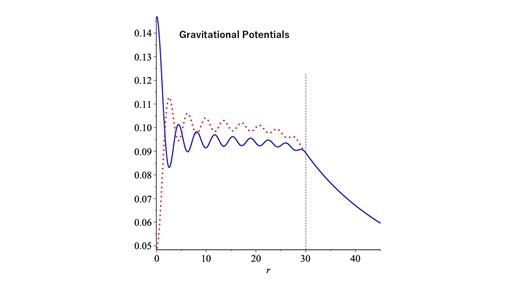
Point-like particles with mass greater than the Planck mass become black holes within Einstein's theory of gravity. This is because information of such particles is hidden inside their own horizon and lost. On the other hand, in the asymptotically background-free quantum gravity, there is a localized excited state with a mass exceeding the Planck mass. Its diameter is given by the correlation length, which is two orders of magnitude larger than the Planck length. The figure on the right shows a solution of the excited state with twice the Planck mass, in which the solid and dotted lines are two independent gravitational potentials. The Planck length is normalized to be 1 here. The outside (r> 30) is represented by the Schwarzschild solution, and the inside has a structure without singularities in which quantum effects of gravity are activated and spacetime fluctuates greatly. This purely gravitational excited state, in which the horizon disappears due to the quantum effect and is nothing but a particle when viewed from the outside, is called a dark particle. Considering the quantum effect of gravity in this way, the problem of Einstein's theory of gravity can be solved. [K. Hamada, Phys. Rev. D102 (2020) 026024, arXiv:2005.06743]
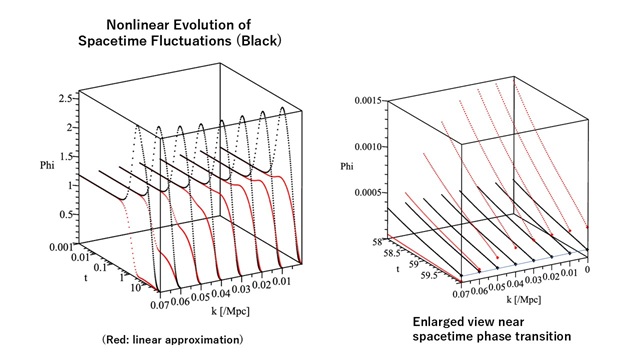
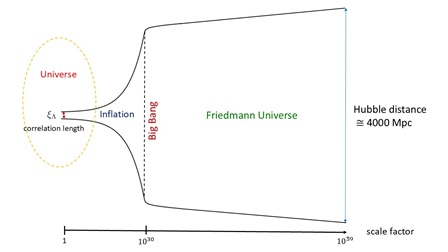
Quantum gravity inflation suggests that the universe expanded about 10^30 times during the inflationary era, and further 10^29 times after the transition to the Friedmann spacetime, about 10^59 times in total. That means that the size of hundreds of Megaparsecs, larger than the current cluster of galaxies, was within the Planck length before inflation. The figure on the left is the result of deriving evolution equations for gravitational fluctuations (gravitational potentials) from the effective action of the above quantum gravity theory and solving them around the inflation solution. Numerical calculation is performed from before the Planck time to the time when the spacetime phase transition (big bang) occurs, where the horizontal axis is physical time. It is shown that the amplitude of the fluctuations, which was initially large, becomes smaller during the inflation period and approaches the observed value of 10^-5 at the time of the phase transition (far right in the figure). In this way, quantum gravity inflation can explain the smallness of primordial fluctuations dynamically, not by fine-tuning. Information of this fluctuations is not disturbed in the process of the phase transition because its wavelength is greatly extended during the inflation period and grows to a scale sufficiently larger than the correlation length of quantum gravity. Therefore, information of scale-invariant spectra before inflation is transferred to the thermal universe after the spacetime phase transition as it is, and it is inherited in the CMB temperature fluctuation spectra and can be observed today. [K. Hamada, Universe 10 (2024) 33, arXiv:2306.01384]
The cosmological constant is never denied from diffeomorphism invariance. Rather, it is more natural to exist. Indeed, it was discovered at the end of the last century by experiments led by Permutter, Riess and Schmidt. The problem with the cosmological constant is not its existence, but that the calculated quantum correction by zero-point energy is 120 orders of magnitude larger than the observed value. At that time, the calculation is usually performed by introducing an ultraviolet cutoff into the Planck scale. On the other hand, a constraint that the whole Hamiltonian derived from diffeomorphism invariance vanishes indicates that zero-point energy vanishes. Where does this contradiction come from? This is because the UV cutoff is a computational method that breaks the diffeomorphism invariance. Conversely speaking, the problem of the cosmological constant does not arise if it is calculated by a diffeomorphism invariant method. In this way, the root cause of the cosmological constant problem is that the world beyond the Planck scale had not been described correctly. The asymptotic background-free quantum gravity theory is truly a renormalizable quantum field theory in which the Hamiltonian constraint exactly holds as the background freedom, and the cosmological constant problem does not occur. [K. Hamada, PTEP 2022 (2022) 103E02, arXiv:2204.03914]
 "Trans-Planckian Physics and Inflation: An Introduction of Renormalizable and Background-Free Quantum Gravity"
By Ken-ji Hamada (Fundamental Theories of Physics vol. 223, Springer Nature, 2025)
"Trans-Planckian Physics and Inflation: An Introduction of Renormalizable and Background-Free Quantum Gravity"
By Ken-ji Hamada (Fundamental Theories of Physics vol. 223, Springer Nature, 2025)
| Preface | ||
| Contents | ||
| Chapter 1 | What Quantum Gravity Should Reveal | |
| Chapter 2 | Renormalizable and Background-Free Quantum Gravity | |
| Chapter 3 | Conformal Invariance as Background Freedom | |
| Chapter 4 | Physical Meaning of Hamiltonian/Momentum Constraints | |
| Chapter 5 | Renormalization Using Dimensional Regularization | |
| Chapter 6 | BRST Conformal Algebra and Physical States | |
| Chapter 7 | Quantum Gravity Inflation | |
| Chapter 8 | Localized Massive Excitations of Quantum Gravity | |
| Chapter 9 | What the Cosmological Constant Problem Is | |
| Chapter 10 | Amplitude Reduction of Spacetime Fluctuations and Primordial Spectra | |
| Chapter 11 | Topology and Quantum Gravity | |
| Chapter 12 | Simplicial Quantum Gravity | |
| Finale | ||
| Appendix | A, B, C, D | |
| References |
"Quantum Gravity and Cosmology Based on Conformal Field Theory" By Ken-ji Hamada (Cambridge Scholars Publishing, Newcastle, 2018) [View Extract]
[Errata]
| Table of Contents | ||
| Chapter 1 | Introduction | |
| Chapter 2 | Conformal Field Theory in Minkowski Space | |
| Chapter 3 | Conformal Field Theory in Euclidean Space | |
| Chapter 4 | Basis of Two-Dimensional Conformal Field Theory | |
| Chapter 5 | Conformal Anomaly and Wess-Zumino Action | |
| Chapter 6 | Two-Dimensional Quantum Gravity | |
| Chapter 7 | Background-Free Quantum Gravity | |
| Chapter 8 | Physical States of Quantum Gravity | |
| Chapter 9 | Gravitational Counterterms and Conformal Anomalies | |
| Chapter 10 | Renormalization in Quantum Gravity | |
| Chapter 11 | The Universe in Einstein Gravity | |
| Chapter 12 | Quantum Gravity Cosmology | |
| Chapter 13 | Cosmological Perturbation Theory | |
| Chapter 14 | From Quantum Gravity to CMB | |
| Appendix | A, B, C, D, E | |
| Bibliography |
Background Free Quantum Gravity and Cosmology K. Hamada, S. Horata and T. Yukawa, ``Focus on Quantum Gravity Research" (Nova Science Publisher, NY, 2006), Chap. 1.
| Contents | ||
| Section 1 | Introduction | |
| Section 2 | Renormalizable Quantum Gravity | |
| 2.1 Brief Summary of The Model | ||
| 2.2 Conformal Invariance and Physical States | ||
| 2.3 Renormalization | ||
| Section 3 | Numerical Quantum Gravity | |
| Section 4 | Cosmology | |
| Section 5 | Conclusion |
MonographMany people believe that there is no world shorter than the Planck length, or that the world is governed by a physical law different from diffeomorphism invariance. Putting a cutoff in the Planck length and thinking of it as an entity of quantized sapcetime shows that. Why do you think so? What is the problem? Essential problems such as singularity, renormalizablity, unitarity, origin of primordial fluctuations, time, and so on ultimately come down to the problem of how to describe the trans-Planckian world as a continuum quantum field theory. The main purpose of this article is to solve these problems and present a way to describe the other side of the Planck scale wall.
Renormalization in Quantum Gravity
Quantum Diffeomorphism, Physical States and Conformal Field Theory
Two Dimensional Quantum Gravity
Others
Publication list by INSPIRE